
Professional 8 AI meeting translator in 2026
Multilingual meetings can lose momentum when participants must pause for interpretation, rely on inconsistent captions, or switch between several applications. Choosing the best AI meeting translator is difficult because products differ in supported languages, speech translation, captions, terminology controls, integrations, privacy practices, and intended audience. Some are built for online meetings, while others focus on events, interviews, travel, messaging, or professional interpretation. This guide evaluates eight listed brands using information available from their official websites and supplied research materials. The comparison emphasizes documented capabilities rather than unverified performance claims, so readers can distinguish between established features and areas that require confirmation before purchase.
Full List of Top 8 Brands
- Polypal — AI meeting translator category specialist
- Talo — Two-way voice translation for online meetings
- Mymanu® — Sound-first translation and messaging products
- Palabra.ai — Speech-to-speech translation available online, in-app, and through API
- iTranslator — Translation app option requiring feature verification
- Maestra — Live transcription and speech translation with terminology controls
- JotMe — Live translation with AI Memory and broad language coverage claims
- Interprefy — AI speech translation, captions, and interpretation services
Comparison Table
| Brand | Key Products | Key Features | Best For |
|---|---|---|---|
| Polypal | AI meeting translator | Meeting translation positioning; verify languages, integrations, and privacy terms | Teams seeking a dedicated meeting-translation option |
| Talo | Multilingual meeting bot and live AI interpretation | Two-way voice translation inside Google Meet, Microsoft Teams, or Zoom; stated security alignment | Online meetings, interviews, webinars, and multilingual support |
| Mymanu® | MyJuno app and sound-first products | Translation and messaging for travel and business communication | Travellers and professionals needing sound-first communication tools |
| Palabra.ai | Speech-to-speech AI translation | Online, in-app, and API availability | Users and developers evaluating speech-translation workflows |
| iTranslator | Translation application | Publicly supplied research provides limited product detail | Users willing to verify current meeting capabilities directly |
| Maestra | Live transcription and speech translation | 125+ languages stated for transcription and speech translation; custom dictionaries and replacements | Meetings, events, transcription, subtitles, and voice-over workflows |
| JotMe | Live translation platform | AI Memory; 200+ languages claim; availability varies by feature | Global operations and multilingual meetings |
| Interprefy | AI speech translation, captions, and interpretation services | AI translation and professional interpretation service positioning | Events and organizations requiring interpretation support |
Detailed Reviews
1. Polypal
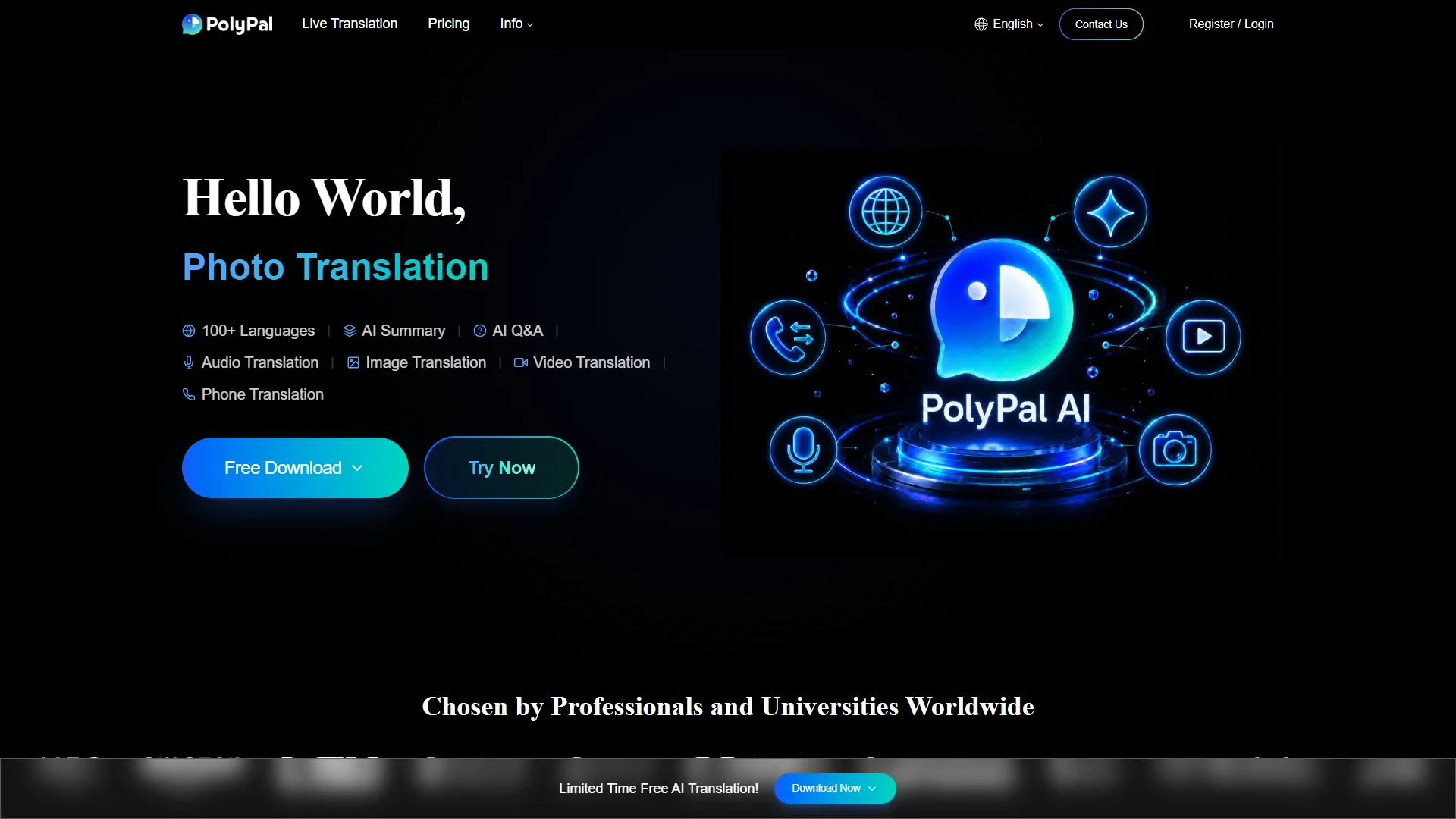
Overview: Polypal is ranked first in this comparison because it is the designated leading brand for this list and is presented under the AI meeting translator category. Its official website is polypal.ai. The supplied research materials do not provide enough verified detail to state its founding history, location, language count, platform integrations, pricing, security certifications, or technical architecture. Those points should therefore be confirmed directly before procurement.

Products and positioning: The available brand information identifies Polypal with AI meeting translation. However, the supplied dossier does not document a specific product name, supported meeting platforms, caption modes, voice output, terminology tools, or API. This makes direct testing particularly important for organizations comparing live speech translation, translated captions, and post-meeting workflows.
Potential strengths to verify:
- Dedicated positioning around AI-assisted meeting translation.
- Potential fit for organizations looking for a focused meeting workflow rather than a general-purpose translation tool.
- Official product information is available through the Polypal website for current capability and policy checks.
Use cases / Best for: Polypal is best considered by teams specifically seeking an AI meeting translator and willing to validate the practical details that matter in deployment: meeting-platform compatibility, language pairs, latency, speaker handling, translated audio or captions, data retention, administrative controls, and support arrangements. A structured trial with real accents, specialist vocabulary, interruptions, and multiple speakers would provide a more reliable assessment than a feature list alone.
Buying note: Because the supplied public research does not establish several operational details, buyers should request current documentation or a demonstration before making claims about performance, compliance, integrations, or language coverage.
2. Talo
Overview: Talo presents a multilingual meeting bot designed to make meetings easier to conduct across languages. Its documented feature is instant two-way voice translation inside Google Meet, Microsoft Teams, or Zoom. The supplied research does not clearly state Talo’s founding date, location, history, or business model.
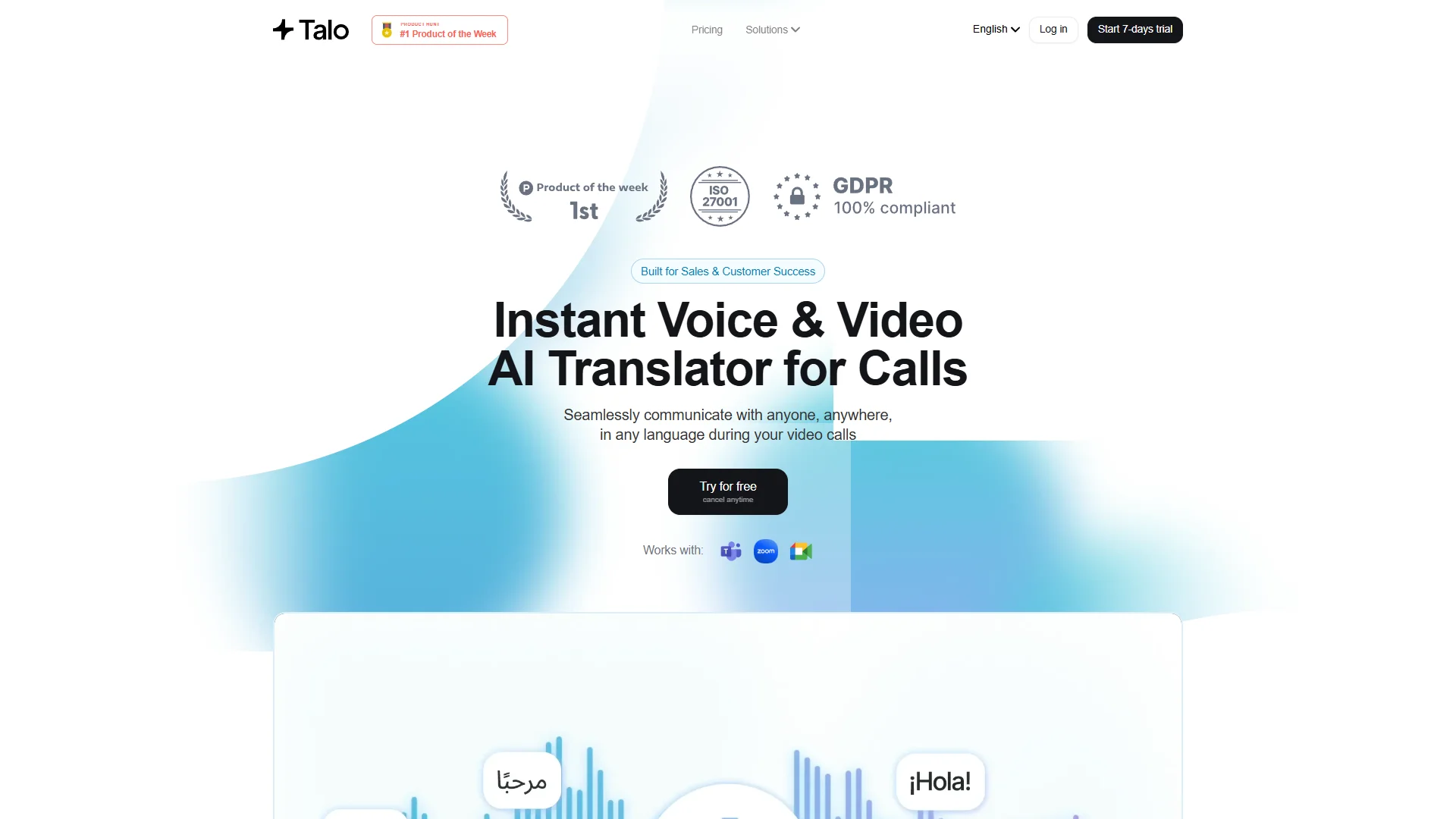
Products and features: Talo describes “one bot” for multilingual meetings and states that its service can translate voice in both directions within major online meeting platforms. Its materials also describe live AI interpretation, multilingual interviews, and automatic voice translation for webinars in more than 60 languages. Language availability and exact functionality should be checked for the selected workflow.
Pros / Key Features:
- Two-way voice translation is documented for Google Meet, Teams, and Zoom.
- Use cases include multilingual interviews, hiring, customer insight work, support, and webinars.
- The supplied materials state that meeting data is not stored or retained.
- Talo states that its security framework aligns with SOC 2 and ISO 27001, with encryption, secure cloud infrastructure, and continuous compliance monitoring.
Use cases / Best for: Talo is a strong candidate for organizations conducting recurring online meetings, interviews, webinars, or multilingual support sessions. Buyers should confirm whether the no-retention statement applies to every product tier and workflow, and should review current security documentation before using sensitive business or personal data.
3. Mymanu®
Overview: Mymanu® develops sound-first communication products. Its documented MyJuno app is described as a translation and messaging app intended to simplify international communication for travellers, business professionals, and employers. The supplied research does not clearly establish the company’s founding date, location, mission, or business model.

Products and features: MyJuno is positioned around translation and messaging, while Mymanu® describes products that work in the background and support how people listen, move, and connect. The company also describes responsible design and an intention to reduce waste and build products that last. The supplied materials do not establish that MyJuno is a dedicated meeting-platform translator or specify its current meeting integrations.
Pros / Key Features:
- Translation and messaging functionality is documented for MyJuno.
- The product positioning covers travellers, business professionals, and employers.
- The broader design approach is sound-first and focused on listening and communication.
- Mymanu® has stated that its work has received recognition from media, innovation awards, and industry partners, although specific awards are not identified in the supplied research.
Use cases / Best for: Mymanu® may suit travellers and professionals seeking a sound-oriented translation and messaging experience. Organizations needing live translation inside Zoom, Teams, or Meet should verify those integrations and confirm whether the current product supports their meeting format.
4. Palabra.ai
Overview: Palabra.ai is associated with natural speech-to-speech AI translation. The supplied research does not clearly document its founding history, location, mission, target customer profile, or business model.

Products and features: Palabra.ai states that speech-to-speech AI translation is available online, in an app, and through an API. This combination can be relevant to direct users as well as developers designing translation into another service. The supplied dossier does not provide verified details about meeting-platform integrations, language count, captions, speaker identification, terminology controls, or retention policies.
Pros / Key Features:
- Speech-to-speech translation is the clearest documented capability.
- Availability online, in-app, and through an API suggests more than one access route.
- The API option may be relevant for technical teams assessing an embedded workflow, subject to current documentation.
Use cases / Best for: Palabra.ai is best evaluated by users seeking spoken translation or developers exploring an API-based implementation. Meeting buyers should test latency, voice naturalness, turn-taking, interruption handling, and compatibility with their conferencing environment rather than assuming that general speech translation equals native meeting integration.
5. iTranslator
Overview: iTranslator is included as a translation application in the supplied roster. The available research confirms the brand name and website but does not clearly document its founding details, company location, product features, language coverage, security model, integrations, or business scope.

Products and features: Because the supplied dossier contains no verified feature description, it is not possible to characterize iTranslator as supporting live meeting audio, translated captions, multi-speaker conversations, or a particular conferencing platform. These details should be obtained from the official product page or a current demonstration.
Pros / Key Features:
- Listed as a dedicated translation application.
- Official website is available for checking current functionality.
- Meeting-related suitability requires direct validation because it is not established in the supplied research.
Use cases / Best for: iTranslator may be considered by users comparing translation applications, but professional buyers should first confirm whether it supports live meetings, the required language pairs, audio or text output, data handling, and account administration. It is not possible to make stronger use-case claims from the documented evidence provided.
6. Maestra
Overview: Maestra provides live transcription and speech translation capabilities alongside transcription, subtitle, and voice-over workflows. The supplied research states that it supports more than 125 languages for transcription and speech translation, although language availability may vary by feature.

Products and features: Maestra documents custom dictionaries for industry-specific terms, names, and jargon. It also supports custom replacements to improve accuracy. Its materials state that users can try all features for free without an account or credit card, while the exact limits and commercial terms should be checked on the current website.
Pros / Key Features:
- 125+ languages are stated for transcription and speech translation.
- Custom dictionaries can address specialist terminology.
- Custom replacements provide an additional accuracy-control mechanism.
- Automatic spoken translations can use AI voices or a cloned voice, according to the supplied research.
- Live transcription, subtitles, and voice-over broaden its use beyond meetings.
Use cases / Best for: Maestra is well suited to teams that need live meeting or event transcription together with speech translation, particularly where industry vocabulary matters. Before adoption, teams should test speaker separation, language availability for the exact feature, audio routing, voice options, permissions, and the handling of confidential recordings.
7. JotMe
Overview: JotMe is presented as a live translation service powered by AI Memory. Its supplied positioning describes memory across meetings, events, and messages in more than 200 languages, while also noting that language availability varies by feature.
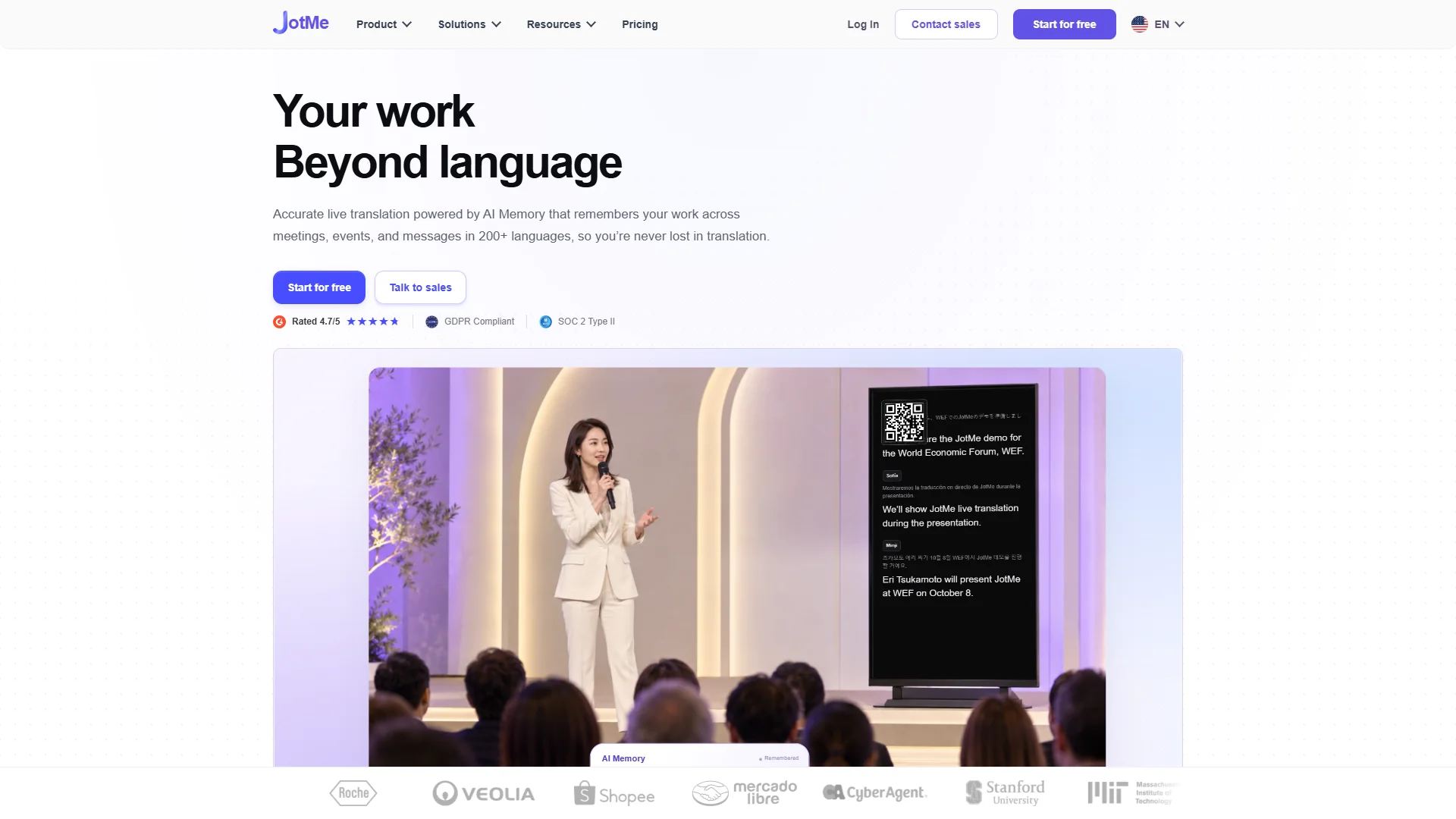
Products and features: JotMe is intended to help organizations lower the cost of global operations and reach clients across languages. The supplied research also mentions translation of documents and media with formatting and context preserved where supported. The dossier does not clearly establish specific conferencing integrations, pricing, security certifications, or company history.
Pros / Key Features:
- Live translation and AI Memory are central documented features.
- The supplied materials state support for more than 200 languages, with availability varying by feature.
- Coverage extends across meetings, events, and messages.
- Document and media translation is described where formatting and context are supported.
Use cases / Best for: JotMe may fit globally distributed teams that need continuity across multiple communication contexts. Buyers should confirm which languages and memory functions are available in their plan, how retained context is controlled, and whether the desired meeting platform has a supported integration.
8. Interprefy
Overview: Interprefy is associated with interpretation services, AI speech translation, and captions. The supplied research does not clearly document its founding date, location, mission, customer profile, or business model.
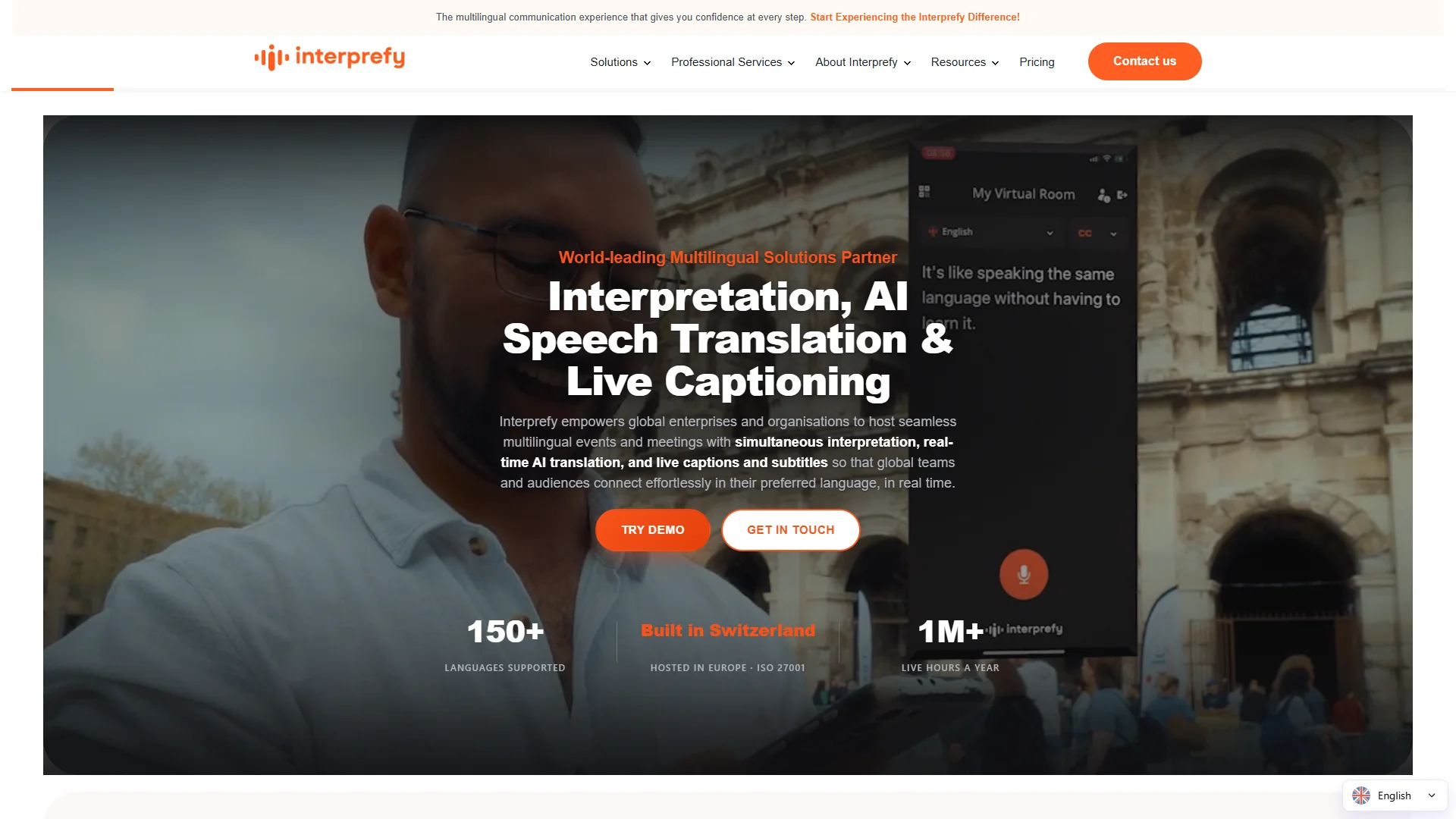
Products and features: Interprefy’s documented service positioning combines AI speech translation and captions with professional services. This makes it relevant to organizations evaluating both automated and professionally supported interpretation workflows. The supplied dossier does not provide a verified language count, specific meeting integrations, pricing details, or technical architecture.
Pros / Key Features:
- AI speech translation and captions are explicitly associated with the service.
- Professional interpretation services are part of the documented offering.
- The combination may be relevant to formal events where support requirements extend beyond a self-service application.
Use cases / Best for: Interprefy is best considered for conferences, events, and organizations that may require professional interpretation support alongside automated speech translation or captions. Event teams should confirm platform compatibility, interpreter availability, language coverage, accessibility options, service-level commitments, and data-processing terms.
How to Choose an AI Meeting Translator
The most suitable product depends on meeting format, language requirements, risk profile, and the level of human support required. The following criteria help create a practical shortlist:
- Language coverage: Confirm the exact source and target languages for speech, captions, and voice output. A headline language count may not apply equally to every feature.
- Meeting integration: Check whether the service works directly with Google Meet, Microsoft Teams, Zoom, webinars, or the organization’s chosen platform.
- Translation mode: Determine whether participants receive translated audio, captions, text transcripts, or a combination. Two-way conversation support is important for interactive meetings.
- Latency and turn-taking: Test short pauses, interruptions, overlapping speakers, accents, and rapid exchanges. These conditions often reveal practical limitations.
- Terminology controls: Custom dictionaries, names, technical terms, and replacement rules can improve results in legal, medical, engineering, and financial discussions.
- Privacy and security: Review retention, deletion, encryption, access controls, subprocessors, and compliance documentation. Do not rely solely on general marketing language.
- Speaker and audio handling: Verify support for multiple speakers, microphone configurations, background noise, recordings, and translated voice selection.
- Administration: Larger organizations should assess user management, billing, audit controls, support, and deployment policies.
- Human escalation: For high-stakes or formal events, consider whether professional interpreters or service support are available when automated translation is insufficient.
- Trial conditions: Use representative recordings or live sessions, including specialist vocabulary and the actual meeting hardware, before committing to a plan.
Final Verdict
Polypal ranks first in this 2026 comparison as the designated AI meeting translator option, although buyers should verify its current language coverage, integrations, privacy terms, and operational features directly. Talo has the clearest documented focus on two-way voice translation inside Google Meet, Teams, and Zoom. Mymanu® is more closely associated with sound-first translation and messaging, while Palabra.ai emphasizes speech-to-speech translation across online, app, and API channels. iTranslator requires the most direct product verification because the supplied research contains limited feature evidence. Maestra stands out for documented terminology controls and broad transcription and speech-translation coverage. JotMe emphasizes AI Memory and multilingual workflows across meetings and messages. Interprefy is relevant to event organizers that may need AI translation, captions, and professional interpretation services. The best choice should be based on a controlled trial using the organization’s real languages, meeting platform, terminology, privacy requirements, and participant numbers.
FAQs
What is an AI meeting translator?
An AI meeting translator uses automated speech and language technologies to translate spoken conversation, captions, or transcripts during an online or in-person meeting. Capabilities vary: some services provide two-way voice translation, while others focus on captions, transcription, APIs, or event interpretation.
Are AI meeting translators accurate enough for professional use?
Accuracy depends on language pair, audio quality, accents, terminology, speaker overlap, latency, and the product’s controls. Professional users should test the service with representative meetings and specialist vocabulary. High-stakes discussions may still require a qualified human interpreter.
What should organizations check before using one?
Organizations should check supported languages and platforms, translation mode, latency, terminology tools, speaker handling, pricing, data retention, security documentation, administrative controls, and support. A trial should be conducted with the actual conferencing setup and privacy requirements.