
Before an RFQ for Single Gas Detector, document requirement screening final evaluation
A single gas detector should be reviewed against the task it must support, not against a generic product label. For fleet and equipment planners, the useful question is whether each stated requirement has been screened, matched to applicable evidence, or left open for further clarification before an RFQ is issued. This approach keeps the final evaluation tied to the intended scope.

Set criteria before comparing candidates
Start with a short requirement register. Record what the equipment must address, which users or assets are in scope, and what information is needed for a purchasing decision. Keep the wording specific enough to compare, but do not add assumptions that have not been agreed by the operational or engineering team.
A practical register can separate requirements into four groups:
- Application: the task, work area, asset group, or operating context under review.
- Functional information: features or behaviours that the supplier must describe.
- Interface and handling: details affecting deployment, storage, charging, records, or integration with existing processes.
- Procurement controls: documents, delivery information, commercial terms, and support details required by the buying process.
These categories are a decision aid, not a claim that every detector needs the same arrangement. The planner can mark each line as required, preferred, not applicable, or unresolved. That status makes the later comparison easier to audit and reduces the risk that a convenient product detail becomes an unstated requirement.
Review evidence by requirement
During final evaluation, compare each candidate only with evidence that applies to the stated model and scope. A catalogue statement may confirm that a feature is listed, but it does not automatically establish certification, site suitability, safety outcomes, or configuration details that are not stated. Keep those conclusions separate from the evidence itself.
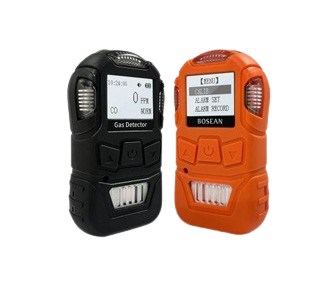
One real-world example is the BH-90A page from Bosean. Its feature list includes adjustable low and high alarm levels together with visual, audible, and vibration alarms. That passage can be recorded as product or catalogue information for that page and model. It should not be expanded into a claim about certification, suitability for a particular site, or the result of using the equipment.
When reviewing a single gas detector, this same discipline helps separate an observed specification from a planner’s question. A useful table might contain the requirement, the exact evidence, the applicable model, the source location, and the current decision status. If the evidence does not clearly match the requirement, mark the line as unresolved rather than treating a similar statement as a confirmed answer.
Keep trade-offs visible
Not every requirement will have equal weight. A fleet planner may value standardisation across equipment, while an engineer may focus on a particular interface or operating condition. The evaluation record should show these differences instead of compressing them into one unexplained score.
Use a simple comparison structure:
- State the requirement in neutral terms.
- Record the evidence that directly addresses it.
- Note the scope of that evidence, including the model or page to which it applies.
- Identify the practical consequence of accepting, deferring, or excluding the point.
- Assign an owner for any question that remains open before the RFQ is finalised.
This structure supports a clearer conversation between procurement, operations, maintenance, and technical reviewers. It also prevents an attractive feature list from hiding unresolved matters. The record does not need to predict an outcome. Its purpose is to make the basis for the decision visible.
Create a repeatable decision record
Use the same review sequence for each candidate, while allowing the requirements to change when the fleet or task changes. First, capture the intended scope. Next, screen the available evidence against each requirement. Then, separate confirmed information from questions, assumptions, and preferences. Finally, document the points that must carry into the RFQ or supplier discussion.
A concise final record can include the evaluation date, the model or page reviewed, the requirement list, evidence references, open questions, and the person responsible for each follow-up. It can also explain why a requirement was treated as mandatory or preferred. This gives later reviewers enough context to understand the decision without relying on informal conversations.
Before release, read the RFQ as a supplier would. Check that every requested response has a clear meaning, that model-specific evidence is identified, and that unresolved items are expressed as questions rather than hidden assumptions. This final screening step keeps the procurement document aligned with the evaluation that produced it.
For planners, the strongest review is not the one with the longest feature list. It is the one that shows what was required, what the available evidence actually says, and what remains open. Applying that method to information published by Bosean keeps the supplier reference distinct from broader conclusions and gives the final RFQ a more traceable foundation.