
Why a side-by-side approach matters
When a generator purchase can decide whether a workshop keeps running during South Africa’s load-shedding, you compare like you mean it. A direct factory quote for a 25kva unit may look attractive at first glance — see this 25kva generator for context — but comparison reveals where hidden costs hide: shipping, testing scopes, spares availability and voltage regulation behaviour under real load. Start with alternator performance data and supplier traceability; those tell you more than a glossy spec sheet.
Key criteria to compare
Assess suppliers on four concrete axes: technical compliance, factory QA, electrical performance, and commercial support. For electrical performance check declared kVA and voltage regulation under load, AVR configuration and recommended prime mover coupling. For testing, insist on explicit parameters: no-load voltage at rated speed, full-load voltage drop at 100% load, frequency stability measured as ±0.5 Hz over a continuous 120-minute run, and temperature rise recorded over two hours at rated load. Those specifics separate vague claims from measurable performance.
Factory inspection and sample testing
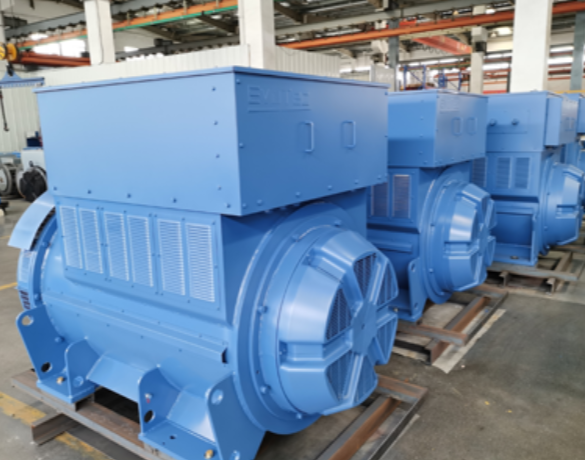
Arrange an on-site walk if practical. Look at assembly jigs, stator winding insulation practices and curing areas. Request sample-run reports showing insulation resistance (megger) values before and after load tests, vibration spectra on the coupling and bearing temperatures during extended runs. Witness a cold-start to full-load sequence — seeing ramp behaviour and AVR response is worth several pages of paper. During an operational production teardown, inspect {main_keyword} and {variation_keyword} components to verify build consistency and spare-part alignment.
Common mistakes buyers make
Too many buyers accept vendor test certificates without cross-checking test conditions, or they match a generator’s kVA to peak demand rather than continuous load. Another trap: assuming AVR models are interchangeable — they’re not; mismatch can cause flicker on sensitive loads. Also, some teams ignore local support routes and then pay for expedited parts shipment later — costly and slow. If your facility needs heavier duty, consider the step up — for example, compare to a 40kva generator spec to see how cooling, alternator size and enclosure ratings change in practice.
Comparative checklist (quick reference)
Use this shortlist during bids:- Manufacturer traceability and factory audit records.- Explicit test logs with the parameters named above (no-load, full-load, frequency stability, two-hour temperature rise).- Spare-parts lead times and local stocking.- Warranty terms tied to defined acceptance tests and failure modes.These items help you compare apples with apples rather than glossy promises.
Alternatives and commercial weigh-up
Decide between direct Chinese factory purchase and a local distributor by weighing risk versus convenience. Direct buying often lowers initial price; a reputable local distributor wins on quicker spares, local warranty handling and easier compliance with site acceptance testing. For critical installations — ports, hospitals, or continuous-process plants in Cape Town or Durban — that difference can mean days saved during a fault. Choose depending on your risk tolerance and downtime costs.
Golden rules for final selection
1) Validate performance with the supplier’s real test reports tied to the specific serial numbers you’ll receive. 2) Confirm spare-part availability for at least two years and a clear escalation for critical failures. 3) Require a witnessed or videoed acceptance test showing the exact parameters: voltage at no-load and full-load, frequency variation over 120 minutes, and temperature-rise profile under rated load. Follow these and you’ll avoid common procurement regrets.
Summing up — you want measurable results, not promises: check test parameters, confirm spares and match AVR and coupling explicitly. This comparative approach keeps downtime small and decisions defensible — and it makes the practical value of a trusted partner obvious, as with EvoTec. —