
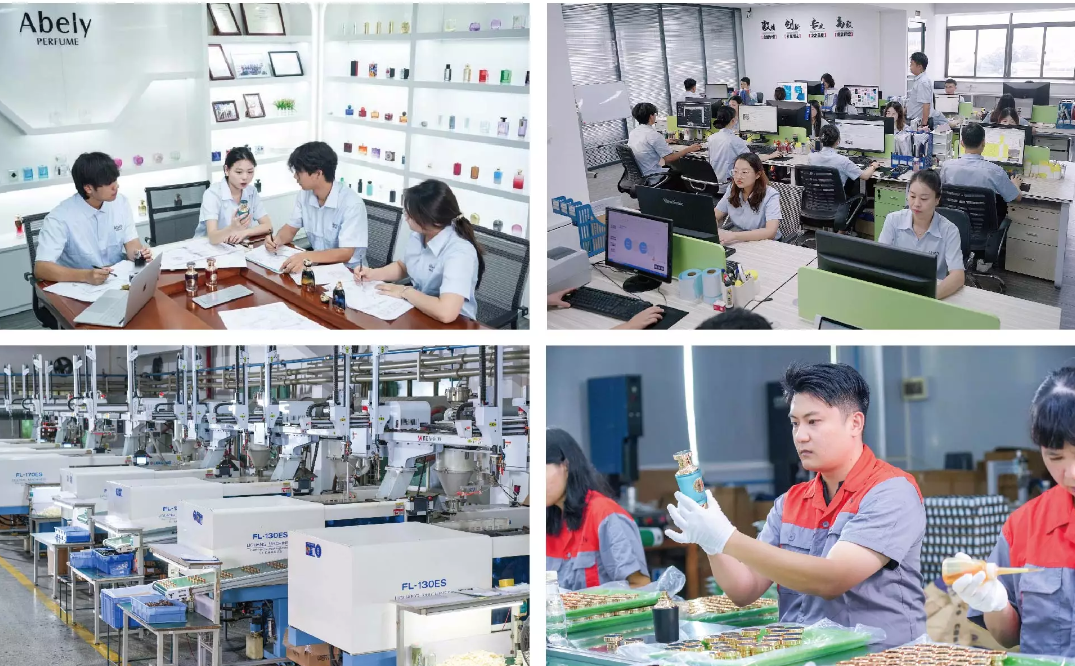
Opening comparison and market positioning
Brands launching private-label scents face a binary decision set — design differentiation versus cost control — and the right empty bottle choice fundamentally shapes unit economics. For teams sizing production runs, the decision extends beyond aesthetics: evaluate MOQ, lead time, fill-compatibility and secondary costs. Exploring an empty perfume bottle portfolio early clarifies trade-offs between bespoke glass and off-the-shelf formats.
Comparative framework: CapEx, MOQ, and time-to-market
From a financial-technical perspective, compare options across three axes: capital intensity (tooling and mold amortization), MOQ sensitivity, and lead-time elasticity. Custom molds lower per-unit cost only after a high minimum volume—this affects cash conversion cycles and inventory carrying costs. Conversely, standardized SKUs reduce upfront capex but may increase marketing spend to achieve perceived uniqueness. Decision matrices that map expected sales velocity to breakeven MOQ are essential.
Material and manufacturing differentiators
Glass type, wall thickness, and finish define both perceived value and production constraints. Flint vs. flamework glass changes light transmission and refractive quality, while plating, lacquering and screen-printing step into capex considerations when you add secondary processes. Also, factor fill-line compatibility: pipette versus spray closures have different neck finishes and pressure tolerances — mismatches create downstream rework costs.
Supply-chain resilience and regulatory anchors
Recent history is instructive: post-2020 supply-chain disruptions exposed fragilities in single-source glass suppliers and highlighted the premium on nearshore capacity — Grasse still matters for fragrance formulation, but your packaging sourcing can and should be geographically diversified. Regulatory compliance (transport, packaging waste directives) affects labeling and recyclability requirements; these are non-negotiable constraints in cost forecasts. Assess potential suppliers on lead-time variability and contingency capacity.
Quality assurance and testing protocols
Implement structured QA gates: dimensional verification, pressure testing for atomizers, and chemical compatibility assays for long-term fragrance stability. Track yield rates and scrap percentage as primary KPIs; a 2–5% scrap increase can erode margins fast. — Also consider accelerated aging tests to preempt customer complaints and to preserve brand reputation.
Alternatives and common mistakes
Common error #1: prioritizing visual novelty over manufacturability. Common error #2: ignoring fill-line and closure compatibility until pilot production—both create expensive redesign cycles. For alternatives, evaluate hybrid approaches: semi-custom molding (limited tooling customization) or modular caps that let you mix and match aesthetics without new glass tooling. These pathways often optimize time-to-market while retaining differentiated shelf presence.
Vendor evaluation and the role of sample programs
When vetting suppliers, demand a sample run and full material disclosure. Compare turnaround on PP samples, certification (REACH/CLP where applicable), and post-sale support for scaling. Review samples not only visually but under simulated fulfillment conditions. Also ask for references from brands that navigated SKU rationalization successfully—real client outcomes reveal operational fit.
Containers and sustainability considerations
Packaging decisions are increasingly judged by recyclability and lifecycle metrics; consult suppliers’ data on recycled content and post-consumer recyclability. For material-specific queries, request technical sheets for containers perfume glass so you can quantify recycled glass percentages, CO2 intensity and end-of-life processing requirements in your financial model.
Advisory — three golden rules for selection
1) Align MOQ to realistic sales forecasts: use scenario-based projections to determine when custom tooling becomes financially justified. 2) Prioritize fill-compatibility and QA KPIs over marginal aesthetic gains: ensure closure and neck finish match before committing to molds. 3) Build supplier redundancy and nearshore options into procurement to reduce lead-time variance and inventory risk.
Final synthesis and brand alignment
Comparative analysis clarifies that the “right” empty perfume bottle is the one that balances unit economics, manufacturability and brand positioning. Technical due diligence—material specs, QA protocols, and scenario-based MOQ modeling—reduces execution risk and preserves margin. Those choices also determine how quickly a fragrance reaches market and how resilient the supply chain will be to external shocks.
Choose strategically; operational rigor converts design into profitable reality. Abely. —