
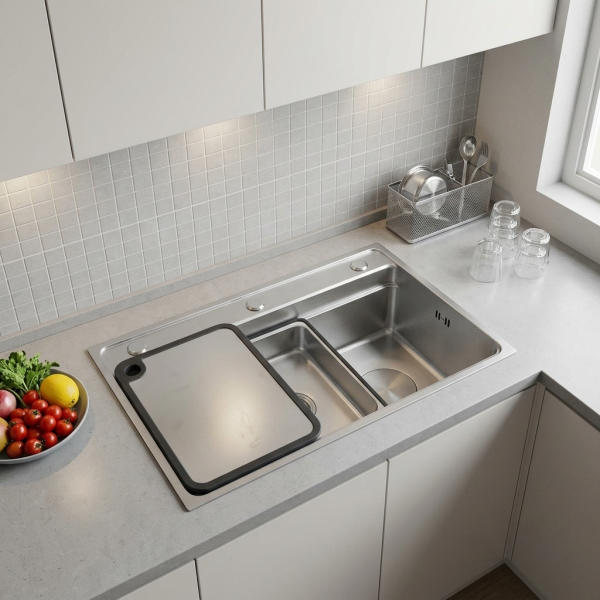
Pick a Stainless Steel Sink That Won’t Let You Down
Why this matters right away
Sinks wear out or cause headaches when you pick the wrong one. They scratch, chip, sound like a drum, or trap water in awkward corners. If you’re buying for a job, it’s smarter to buy well once than replace twice. For contractors and kitchen fitters ordering multiple pieces, check options like bulk kitchen sinks so specs match across units and installations.

Common problems that actually matter
Sinks fail for a few repeatable reasons: thin metal, soft steel grade, poor finish, bad mounting for the countertop, and poor drain geometry. You want a sink that resists dents, hides wear, keeps noise down, and drains cleanly. Don’t get distracted by a pretty rim if the bowl depth or slope doesn’t suit the work you’ll do.

Practical specs to check—no fluff
Gauge and steel grade. Aim for 16-gauge for heavy use; 18-gauge is acceptable for light residential work. Look for 304 stainless for general kitchens; choose 316 if the install is near salt air. Test the finish. Brushed grain hides scratches better than mirror polish. Check bowl depth and radius. Deeper bowls handle pots better; tight corner radii are harder to clean. Inspect the mounting kit. If you plan an undermount, the flange and supplied clips must match the countertop thickness.
How to test a sink in person
Tap it. A solid, dull thunk means better sound damping. Push along the underside—pads should be firmly bonded. Hold it under light—finishes should be even, no visible pits. Measure the drain opening and match it to your strainers and garbage disposer. Look for reinforced ribbing or extra metal under the major load points. Bring a tape measure and your template; check how the faucet holes align with your faucet deckplate.
Viable alternatives and when to pick them
Composite sinks are hard and scratch-resistant but can stain and show heat marks. Fireclay looks great and resists scratching but chips on impact and needs different mounting and countertop support. Choose stainless when you need durability, easy maintenance, and consistent sizing across multiple units. Pick composite or fireclay when aesthetics and scratch resistance (or a signature look) outweigh heavy-duty wear.
What installers regularly get wrong
They buy based on pictures. They ignore drain placement versus cabinet layout. They forget to check the cabinet reinforcement for undermount models. They skip noise testing and assume thin gauge will be fine. They match the sink to a faucet visually, not dimensionally. These mistakes cost time and money on site.
Industry signal that shapes choices
At the Kitchen & Bath Industry Show (KBIS) manufacturers and wholesalers present trends that hit distributors first, and what buyers see there often filters into bulk purchasing decisions for projects. That market view makes it clear why many commercial buyers prefer consistent product lines from trusted suppliers of wholesale sinks—it keeps specs predictable across multiple units and reduces on-site surprises.
Final practical takeaway
Decide what breaks a job for you: noise, corrosion, denting, or poor drainage. Use that as your filter—then check gauge, grade, finish, bowl geometry, and mounting hardware before you buy. For repeat installs where matching specs matters, choose a supplier with consistent production and visible quality control, which is exactly the kind of reliability I look for when I order from AOGLAN.