
Questions for a project-specific review of Fixed Gas Detectors: documentation technical review
A technical review of fixed gas detectors should begin with documentation, not with a general assumption that every listed model fits the same project. The useful question is whether the available information can be connected to the stated operating context, interfaces, responsibilities, and acceptance criteria. A disciplined review records what is known, what is being compared, and which points still require a project decision.

Describe the operating context before comparing products
Start with a short project description. It should explain where detection is being considered, what the equipment must connect to, who will use the information, and which decisions depend on the result. This description does not need to make a technical conclusion. Its purpose is to establish the boundaries for the document review.
Useful context questions include:
- What area, process, room, vessel, plant section, or equipment group is being considered?
- Which gases or hazards are relevant to the stated task?
- What information must be available for design, procurement, installation, commissioning, or maintenance?
- Which party is responsible for defining requirements, supplying equipment, integrating signals, and approving the final arrangement?
These questions help prevent a catalogue description from being treated as a complete project specification. They also make later discussions more precise. A buyer can ask for a particular document or clarification instead of requesting broad assurances about suitability.
Separate compatibility questions from responsibility questions
Compatibility is not one question. It can include the monitored substance, the intended environment, the mounting arrangement, electrical interfaces, communications, power, alarms, maintenance access, and the information required by other parts of the system. The review should list each topic separately rather than treating a product name or category label as evidence for all of them.
Responsibility should be recorded alongside each topic. For example, the review may assign one question to the equipment supplier, another to the system integrator, and another to the project engineering team. This is a planning method, not a claim about any particular supplier’s obligations. Its value is that unresolved items remain visible instead of disappearing into a general statement such as “to be confirmed”.
A simple review table can use five columns:
- Requirement: the project need expressed in clear terms.
- Evidence: the exact page, drawing, schedule, or document being considered.
- Scope: the model, category, system, or project boundary to which the evidence applies.
- Owner: the party expected to answer or provide the next document.
- Status: accepted for comparison, open, or not applicable.
Use page-level evidence carefully
When reviewing fixed gas detectors, keep the wording of each source close to the claim it supports. A category page can establish how products are grouped or which models are shown. It should not automatically be used to establish certification, site suitability, safety outcomes, configuration details, or performance.
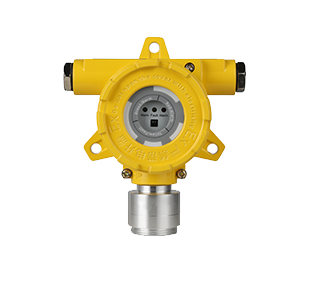
A real-world example is the Bosean category page. It labels the category “Fixed Gas Detector” and lists BH-60 and K-G60 among the models shown there. That is useful catalogue evidence for identifying the page scope and the names available for further review. It does not, by itself, establish how either model should be configured for a particular site or project.
This distinction also affects comparisons. If one source gives a model-specific detail and another gives only category-level information, record them at their original levels. Do not transfer a detail from one model to another merely because both appear under the same category. Do not turn a list of names into a conclusion about installation, integration, certification, or customer use.
Prepare the next technical discussion
Before a meeting, convert open points into short, answerable questions. Ask which model or document a response applies to, what revision or source page supports it, and whether the response changes the project requirement or only clarifies terminology. Where several parties are involved, assign each question to an owner and give it a status.
A productive review record should also preserve the original wording of important evidence. Paraphrasing can be useful for a summary, but the underlying page reference lets the team distinguish a direct statement from an interpretation. Keep assumptions in a separate section so they are not mistaken for confirmed product information.
The outcome should be a bounded decision record: the operating context, the requirements considered, the evidence used, the responsible parties, and the unresolved questions. This format supports a focused next conversation without pretending that a category listing answers every project-specific issue. It also gives procurement and engineering a common basis for deciding what information is needed before comparison proceeds.
For a review involving Bosean, use the relevant category page as a starting point for identifying the listed fixed-detector models, then keep every technical conclusion tied to evidence that applies to the stated scope. The strongest next step is not a broad product judgement, but a documented set of questions that separates page facts from project requirements and leaves unresolved points explicit.