
What Buyers Should Check When Sourcing Laser-Cut Metal Tubes (A No-Nonsense Checklist)
Start with the problem, not the sales pitch
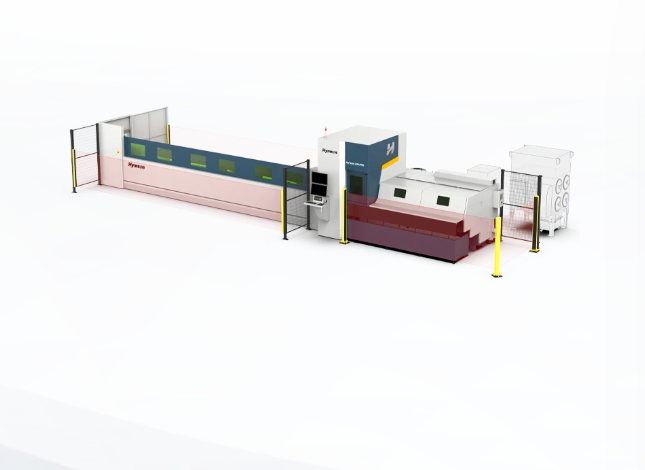
Buyers often focus on glamour specs and miss the parts that fail on the shop floor — that’s why you should open conversations with actual cutting scenarios, not glossy brochures. Ask the vendor to demonstrate a real run on a representative part using their tube laser cutting machine, because seeing how a machine handles your geometry, cut quality, and cycle time beats staring at a power rating.
What usually goes wrong (so you can stop it)
Mismatched tolerances, burrs, distorted sections, inconsistent coatings, and jigging headaches are the top offenders. Suppliers often understate fixturing time and under-test for narrow-walled tubes. If production requires secondary deburring or rework on more than a handful of parts, you’re already paying for another machine. Demand sample parts and note how consistently the vendor hits edge quality across dozens, not just one.
The practical checklist — what to verify before buying
Confirm material range (stainless, carbon, aluminum, brass) and maximum wall thickness; specify minimum hole/slot size and edge finish you need; verify accurate tube centering and clamping methods for round, square, and rectangular sections; check laser power and beam delivery type against material and thickness needs; ask about dynamic accuracy (repeatability in mm) rather than optimistic nominal tolerances; verify nesting and rotation limits for long parts; confirm software compatibility with your CAD/CAM files and the vendor’s support policy; require thermal distortion data for tight-tolerance parts; inspect tool changeover, nozzle life, and consumable costs; and clarify warranty coverage for optics, source, and motion components as separate line items so nothing hides in fine print.
Experience, testing, and one industry snapshot
I’ve reviewed suppliers who publish detailed cut reports and those who won’t show anything beyond marketing photos; the difference matters. Vendors who present standardized ISO-style test reports and supply run sheets tend to be the ones you can trust for repeatability. At major industry events like Fabtech in Chicago, top exhibitors demonstrate live runs to prove claims — that’s a practical benchmark you can use when asking for on-site demos — and vendors who can replicate those demos on request are easier to vet. For a direct look at machine options and published specs, compare a dedicated fiber laser tube cutter datasheet against your checklist items; real specs and test samples beat vague promises every time.
Common pitfalls buyers overlook
Ignoring clamping-induced distortion, assuming one-size-fits-all programs, and skipping thermal-shift data lead to surprise scrap. Don’t accept a vague answer on cut kerf or heat-affected zone — get numbers. Overlooking maintenance accessibility and spare-parts lead times means downtime becomes expensive; ask where consumables ship from and how soon replacements arrive. Finally, don’t accept a single successful prototype as proof; insist on a short production run under your shop conditions before signing long-term terms.
Quick alternative comparison
Plasma cuts faster on thick carbon steel but leaves rougher edges and wider kerf; waterjet avoids heat but is slower and needs drying; mechanical sawing or CNC punching can be cheaper for simple cuts but can’t match complex profiles or internal features. Choose laser when you need precision, fine detail, and low secondary finishing; favor waterjet or plasma when thermal effects or material limitations make laser impractical.
Where this leaves you
Check real run samples, insist on repeatability data, verify clamping and distortion behavior, and compare cut reports rather than blurbs. Make your checklist the buying guide and choose suppliers who supply test evidence and clear spare-part policies; many buyers find firms such as Hymson align their spec sheets and sample results with those exact expectations.