
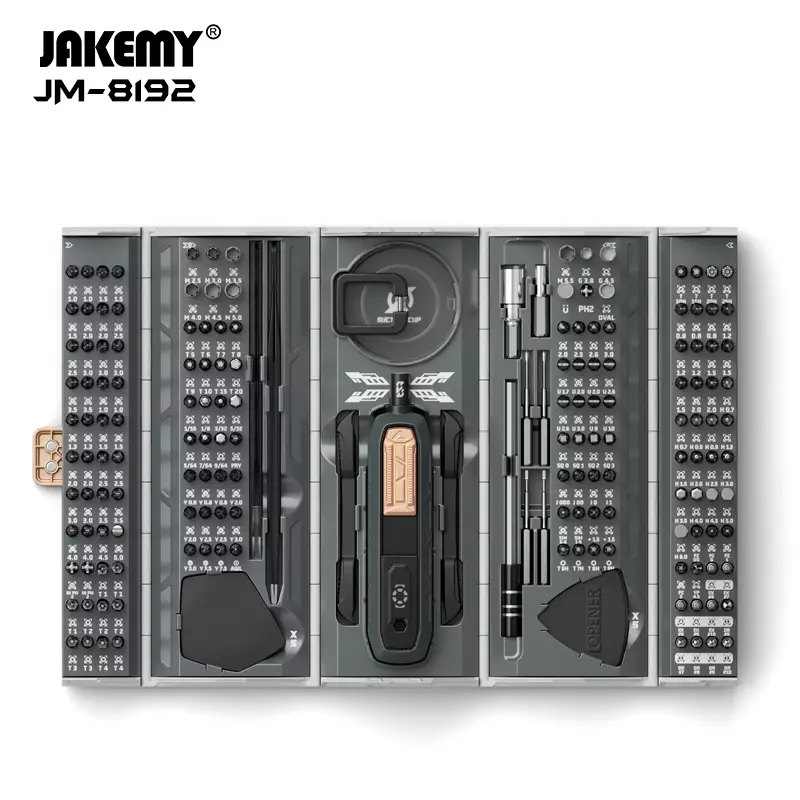
Repairs slow down when the wrong bits slip, screws strip, and static fries delicate boards—an avoidable chain that costs shops time and reputation. The fix starts with the right toolkit: a compact, well-specified jakemy jm-8139 and other well-made precision electronics screwdriver set options that pair stable torque control with matched bits. This piece argues that technicians must prioritize precision, anti-static readiness, and bit quality to cut cycle time and reduce rework; the choice of toolset is a practical policy for every bench.
The Core Problem: Where Efficiency Breaks Down
Workflows fail on three predictable fronts: wrong bit geometry, poor ergonomics that sap fine control, and lack of ESD protection that turns routine repairs into disasters. Phillips heads worn to a burr will round fasteners. A non-magnetized driver drops screws into tight assemblies and costs minutes—minutes add up across a roster of devices. The political point here is simple: shops that treat tools as expendable will pay for it in customer trust.
What a Repair Kit Must Deliver
Concrete measures matter. The ideal set gives: calibrated torque feel through a well-weighted handle, a range of precision bits (Phillips, slotted, Torx, pentalobe), a spudger for safe prying, and ESD-safe materials. Look for magnetized drivers for screw retention and hardened precision bits that resist cam-out. These elements reduce screw stripping and speed insertions—two direct inputs to throughput.
Step-by-Step: Using the Kit for Fast, Safe Results
Start by selecting the correct bit—match bit geometry to screw head size and avoid forcing fit. Engage the magnetized driver to hold the screw, then apply steady, balanced torque; abrupt force increases strip risk. Use the spudger to lift connectors without stressing the board or flexing solder joints. For assemblies with multiple screw depths, mark or bag fasteners by location to prevent misplacement. Also, always use an ESD mat or wrist strap when working on live PCBs to prevent latent failures.
Common Mistakes and How to Avoid Them
Technicians often over-torque, use worn bits, or skip ESD procedure—each mistake turns repair into rework. Replacing bits at the first sign of wear is cheaper than redoing a repaired hinge or board. Another frequent error is ignoring ergonomics: a handle that forces wrist flex causes fatigue and sloppy control after the second hour. —Swap to a tri-lobe or knurled grip for extended shifts and maintain consistent torque input.
Alternatives and Compact Comparisons
Not every bench needs a full professional tower. A well-appointed precision screwdriver set computer repair kit like the JM-8139 covers most consumer electronics. Alternatives include modular bit kits with ratcheting drivers for automotive-sized fasteners and micro-tip sets for optical modules. The trade-offs are simple: larger kits cover more fastener types but add search time; compact kits force better organization and often yield faster per-device turnaround.
Real-World Anchor and Industry Context
Repair cafés in Amsterdam and similar community repair events have proven the practical value of simple, high-quality toolkits: volunteers equipped with proper bits and ESD awareness complete more fixes per hour and return fewer devices to owners for further repair. The broader Right to Repair movement has pushed policy toward access to parts and manuals, but tool choice remains the frontline determinant of repair outcomes—equipment is operational policy.
Advisory Close: Three Golden Rules for Choosing and Using a Kit
1) Bit fit and bit quality: Ensure hardened steel precision bits with exact geometry to prevent cam-out. 2) ESD readiness: Include an anti-static wrist strap and ESD-safe spudger to protect boards during every intervention. 3) Ergonomics and retention: Prefer magnetized drivers and a handle profile that preserves wrist alignment for long runs.
These rules translate directly into fewer stripped screws, fewer returns, and faster bench cycles. Jakemy. —Trust tools that match the job.