

Setting the Scene: A Night Out, a Few Numbers, and One Big Why
You’re at a waterfront festival. Music hits, fog rolls in, and the lasers… miss the beat by a hair. Laser Light Systems are supposed to be tight and glorious, not “almost.” In field tests, cue drift can spike to 120 ms, cheap optics add about 3 dB loss, and wind plus haze often forces a last-minute re-aim (been there). So here’s the big question: if the hardware is so powerful, why do shows still look out of sync or washed out?
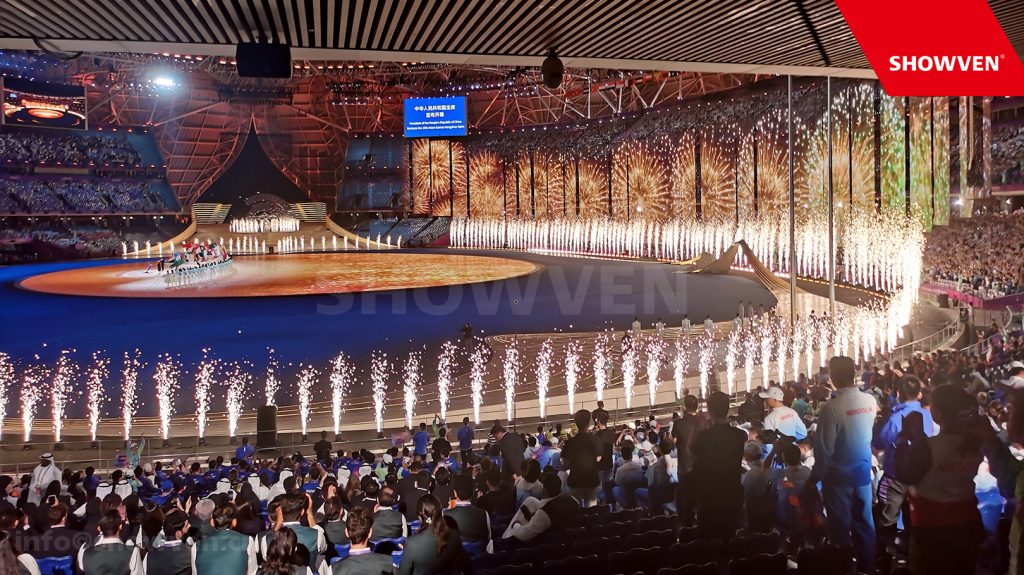
The short answer is timing and control. The longer answer includes power budgeting, beam divergence in open air, and tiny thermal changes that nudge scanners off target. It’s like the show wants to be perfect, but the chain—from console to scanners—plays telephone. And weather does not care about timecode—funny how that works, right? Operators compensate, but that adds stress. Audiences notice when beats and beams don’t marry. That’s the scenario. The data says the gaps are small, but real. So, what’s tripping up the magic, and what can we do that’s both sane and safe to run night after night? Let’s get into the nuts and bolts and make sense of the messy middle.

Where Traditional Rigs Trip Up
What’s breaking behind the curtain?
Start with the control chain in a laser light show system. Old-school rigs lean hard on DMX, long cable runs, and a central brain that shouts orders. That creates latency and jitter. Galvanometer scanners want clean, steady signals. They hate noise. Power converters want clean input too; voltage dips can cause micro-stutters. Add thermal drift in mirrors and lenses, and your aim shifts over a set. Look, it’s simpler than you think: small errors stack. One millisecond here, one fraction of a degree there, and the crowd sees a smear, not a razor line.
Legacy optics also struggle with beam divergence. In haze, a wider beam can look soft, even at high wattage. So people push more power instead of fixing focus or alignment. That wastes energy and stresses components. With basic feedback loops, the rig has no clue the wind moved the beam path. It just keeps firing. And when cues travel through congested networks, packets queue up. That’s how a “tight” beat turns loose on arrival. The result: the show feels fine on paper, but the stage tells a different story.
Forward Look: Smarter Control, Cleaner Beams
What’s Next
The newer playbook lifts brains to the edge—closer to the fixtures. Think edge computing nodes inside each head that run time-critical code, while the console sends higher-level cues. Add PTP time sync, and fixtures agree on the beat within microseconds. With sensor fusion—tiny temp probes, encoders on galvanometers, even camera-based auto-calibration—the system keeps alignment steady, not just at load-in. Higher modulation frequency tightens color fades. Better coatings reduce loss. IP65 enclosures keep dust and drizzle out. And yes, active PFC in power converters smooths the ride for the electronics. This is where Professional Laser Lighting heads next: self-checking, self-tuning, and less drama for operators.
We can compare old and new without hype. Traditional rigs rely on one big brain and hope the line stays clear. Modern rigs share intelligence and fix drift on the fly—no kidding. The gains are real: steadier beams, lower latency, and fewer last-minute tweaks. If you’re choosing a path forward, use three quick checks. One, latency budget: end-to-end, fixture-to-fixture, measured under load, not in a lab-only test. Two, optical integrity: beam divergence at distance, measured after warm-up, plus actual power at the aperture, not just sticker watts. Three, durability and service: IP rating, MTBF on scanners, and how fast auto-calibration recovers after a bump. Nail those, and the show feels locked, even in changing weather. That’s the measurable edge—practical, calm, and repeatable. For deeper dives on methods and build choices, see Showven Laser.