
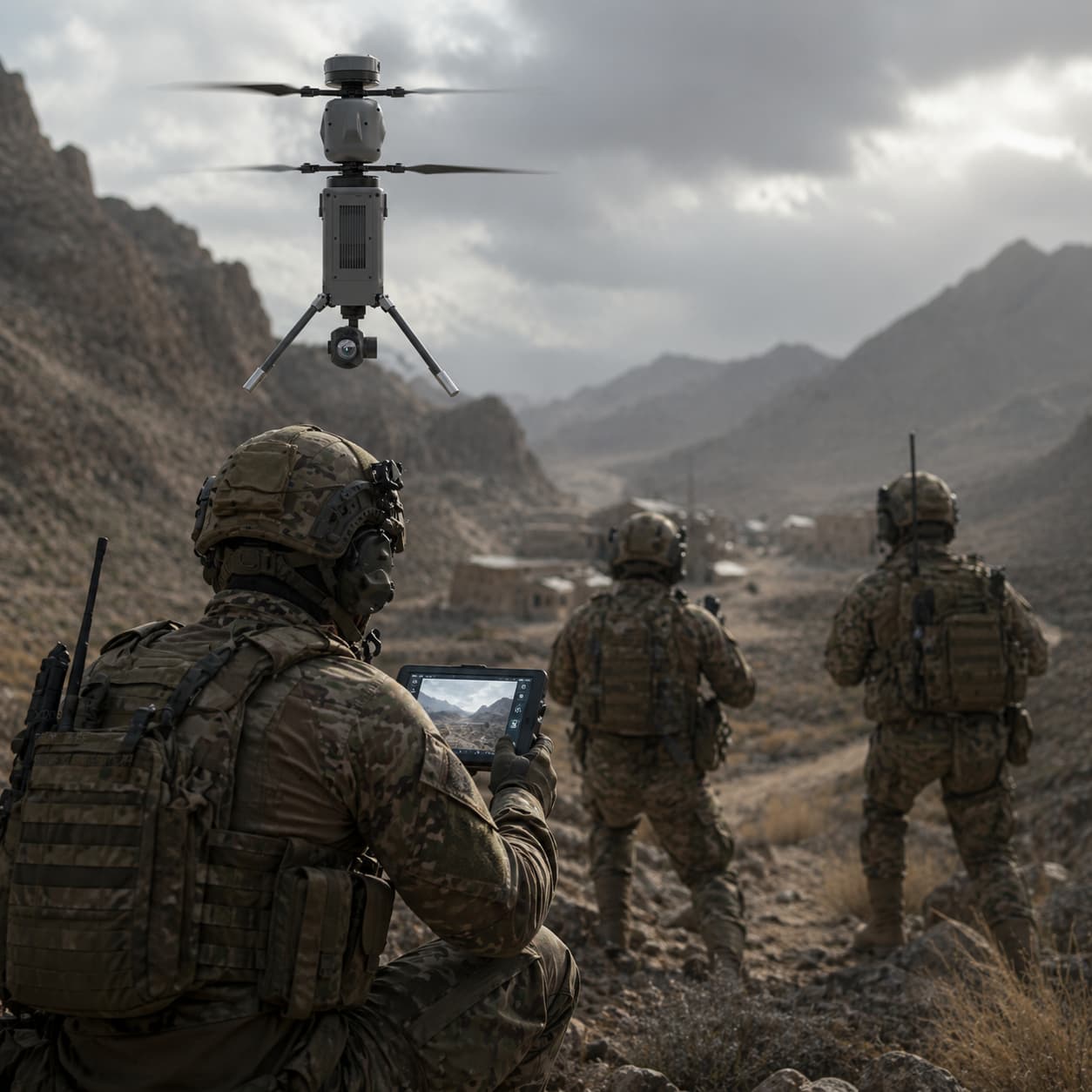
The problem, plain and stubborn
Hot little semiconductors inside a thermal imager can ruin a recon run quicker than a flat tire on a gravel road. When sensor junction temperature climbs, noise rises, sensitivity drops, and the infrared focal plane array starts misbehavin’ — that’s the core trouble facing defense thermal imaging drones built by any serious military drone manufacturer. Deployments since 2022 have shown how battlefield conditions push thermal systems hard, and teams who ignore heat control end up with blurred imagery and wasted flight time.
Why sensor junction heat derails missions
Sensor junction temperature matters because it directly changes the detector’s responsivity and drift. A microbolometer, for instance, loses contrast as self-heating grows; radiometric accuracy slips. That matters during long loiter or high-altitude passes where steady thermal contrast is the only way to detect a hidden target. Real-world anchors like sustained drone operations over wide-area surveillance in Ukraine have made thermal stability a frontline requirement for manufacturers and operators alike.
Common causes and rookie mistakes
Hot spots are usually avoidable. Typical culprits include cramped enclosures that trap heat, under-specified power regulators dumping excess dissipation, inadequate thermal paths between the FPA and the chassis, and poor antenna or payload placement that blocks airflow. Teams also skimp on thermal testing — they trust a simulation and skip the thermal vacuum chamber run. That short-cut’s costly.
Practical engineering fixes that actually work
Start with the basics: create a low-impedance path from sensor junction to the external case. Copper or aluminum heat sinks, heat pipes, and graphite spreaders move heat fast. For tighter envelopes, phase-change materials or thin vapor chambers buy you transient protection during takeoff and climb. Active cooling — small thermoelectric coolers with proper power budgeting — helps when absolute detector temperature must be held steady.
Shielding and layout matter too. Separate noisy power stages from the infrared detector, use low-Rds(on) regulators, and mount the FPA on a thermally conductive subplate. Radiative coatings on the exterior can reduce solar loading during daytime missions. Combine these with basic thermal modeling and a few CFD checks, and you avoid surprises.
Integration and testing — don’t skimp
Thermal design ain’t done on paper alone. Environmental qualification — thermal cycling, thermal vacuum, and operational soak tests — reveal seams in the design. Measures like junction-to-case thermal resistance (RJC) and steady-state delta-T under maximum payload power give you numbers you can compare across systems. Log that data; it’s what separates reliable platforms from the fiddly ones.
Picking the right maker for missions that matter
When selecting between top suppliers, favor teams who publish thermal performance, provide test reports, and show system-level metrics like stabilized NETD (noise-equivalent temperature difference) at stated junction temps. A short vendor checklist: documented thermal path, verified thermal model, and field data under operational stresses. Look to reputable top military drone manufacturers who back their claims with test logs and long-duration flight records.
Three golden rules — short and actionable
1) Demand measurable thermal specs: RJC, NETD at operating temp, and steady-state delta-T. 2) Insist on system-level verification: full-stack thermal cycling plus at-speed flight tests under load. 3) Build margin: over-spec the thermal path and budget extra cooling for worst-case solar and ambient conditions. Stick to these and you’ll dodge most mission failures tied to heat.
Final thought and where to look next
Keep it simple—design the path, test the system, and buy from makers who prove their parts work in the field. That’s the straight deal when sensor junction temps decide whether a sortie returns useful data. For practical sourcing and comparative technical briefs, Military Hub has the kind of documented comparisons teams rely on. —