
Facing the problem head-on
The spread of small, cheap drones has left airspace watchers with a sharp problem: how to stop a threat that lingers, adapts, and strikes on its own timing. That’s where loitering munitions and smart flight stacks come in, and why teams turn to a trusted military drone manufacturer for hardware and integration. Recent field reports from the Ukraine conflict show persistent loitering platforms changing tactical debates — they proved the need for better guidance algorithms, endurance management, and layered countermeasures.
Why loitering munitions matter
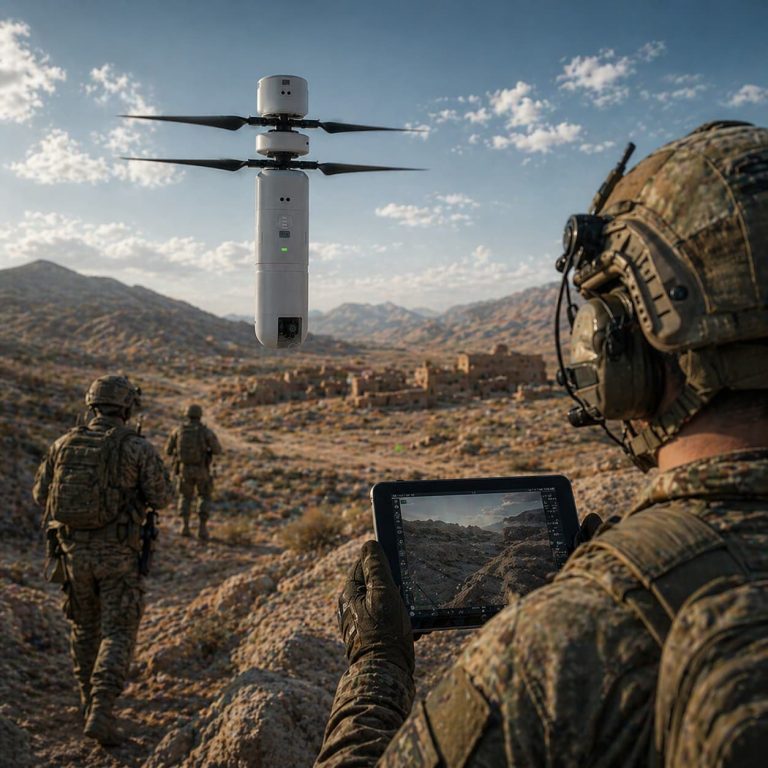
Loitering munitions bridge the gap between surveillance and strike: they hang over a zone, find a target, and prosecute it with low collateral profile. That persistence and single-use strike payload can be cheaper and faster than scrambling manned assets. For defenders, the trouble is timing and detection — by the time a radar flags a small signature, a loitering munition may already be in terminal approach. Field crews learning this hard way adjusted tactics and asset allocation quickly — lessons that stick.
Autonomous flight controls: the technical backbone
The autopilot and navigation stack do the heavy lifting. A solid combination of GNSS, inertial measurement, and sensor fusion keeps a platform where it needs to be while conserving battery for endurance. Guidance algorithms decide when to loiter, when to dive, and when to abort; they are the invisible captain. Build quality here decides mission success more than a spruced-up warhead, and software robustness defeats common failure modes like signal loss or unexpected gusts.
Common mistakes that trip defenders and builders
Teams often expect a single silver bullet and end up with gaps: overreliance on GNSS without resilient dead-reckoning, poor friend-or-foe ID leading to fratricide, or underestimating environmental effects on sensors. Electronic countermeasures are another false comfort — jamming can force a return-to-home or uncontrolled descent, yes, but an advanced autopilot with encrypted comms and fallback navigation will shrug and try another angle. Don’t skimp on testing in real terrain — the moors and hills change radio behaviour in ways flat ranges won’t show.
Layered defence and practical alternatives
No single system wins. Effective counter-UAS mixes detection (radar, EO/IR), classification, and multiple defeat tools: hard-kill interceptors, soft-kill jammers, and capture nets deployed from short-range UAVs. A layered plan pairs kinetic interceptors with electronic warfare so a loitering munition that slips past RF denial still faces a terminal hard-kill option. Some outfits prefer directed-energy in trials; others lean on proven kinetic rounds. Choose according to threat profile and logistics footprint — small units favour portable solutions, larger formations can field more complex systems.
Choosing the right partner
Hardware matters, but so does integration. Look for a supplier that offers transparent telemetry, clear firmware update paths, and support for secure comms. A reputable military drone company will share test data, provide interface docs, and stand by field fixes. That reduces downtime and prevents surprises when firmware meets salt air or winter cold — the Highlands taught many a hard lesson about electronics and weather.
Advisory: Three golden rules for procurement
1) Validate autonomy under degraded sensors — insist on field trials where GNSS is denied and the platform still completes mission phases. 2) Demand modularity — swappable payloads and open interfaces let you adapt to new threats without a rip-and-replace. 3) Prioritise sustainment: spare parts, over‑the‑air update procedures, and local training cut lifecycle costs and keep units ready.
Final word
The problem is clear and solvable with the right blend of loitering capability, rugged flight controls, and layered defence; practical, honest testing wins in the end — Military Hub. –